Rewilding and Shifting Baseline Syndrome
The paradox of the Scottish Highlands
Rewilding is a controversial term these days. Like ‘sustainability’ in the 1990s and ‘biodiversity’ in the 2000s, rewilding has become the conservation buzzword of the decade, championed by environmentalists the world over as a solution to the havoc humanity has wreaked on the natural world. However, the term itself, once you start to unpick it, is rife with inconsistencies.
For a start, in order to re-wild, we need to decide what a ‘wild’ environment looks like – and in Western culture, which conceptualises humanity and nature as fundamentally separate, this is often taken to mean total exclusion of human interference. But humans have been influencing the global biosphere for millennia: the last time that the natural world was in an untouched state, Earth was in the grip of an ice age. We do not actually know exactly what a ‘natural’ environment would look like in today’s climate. Therefore, it is we humans who must decide what a ‘wild’ ecosystem constitutes today, and do the work to make it a reality. And herein lies the problem: if a wild landscape is one that is free from human interference, surely a rewilded landscape is not wild at all?
This major conceptual flaw does not stand up to closer inspection, and has created misunderstandings that lead to controversy when implementing rewilding schemes. Rewilding is often associated with the reintroduction of large, charismatic mammals such as wolves and lynx, which creates political uproar due to their reputation as dangerous predators. Although there is evidence that reintroducing apex predators can have a ‘cascade’ effect through ecosystems, exemplified by the astonishing results of wolf reintroduction in Yellowstone National Park, USA, there is often a secondary agenda of bringing back such species simply for their charisma and for maximum publicity. Calls to reintroduce the wolf to Scotland, where it was hunted to extinction in the eighteenth century, are strongly opposed by those who fear the impact it could have on traditional livelihoods such as sheep farming. Besides, from an ecological perspective, the wolf alone is not enough: putting back one piece of the jigsaw is pointless if the rest of the pieces are still missing.
Nowhere is this more evident than the UK, one of the most ecologically impoverished countries in the world. Not only have we lost the wolf, the bear, and the beaver, but the abundance of insects and birds has plummeted (see this recent report for some depressing statistics) and we have destroyed 99% of Scotland’s native pine forests. Although I have known for years that Britain is a biological desert – even those parts of Scotland that we cherish and enshrine in law as ‘wild land’ – it hit home hard when I visited the Alps for the first time in summer 2018. Although far from pristine, Triglav National Park, Slovenia, retains far more of its native flora and fauna than the UK. And it showed. Hiking through a high alpine rock garden, surrounded by marmots letting out shrill alarm calls and with miles of forest spread out beneath my feet, I was nearly brought to tears to think just how much we have lost in the UK.
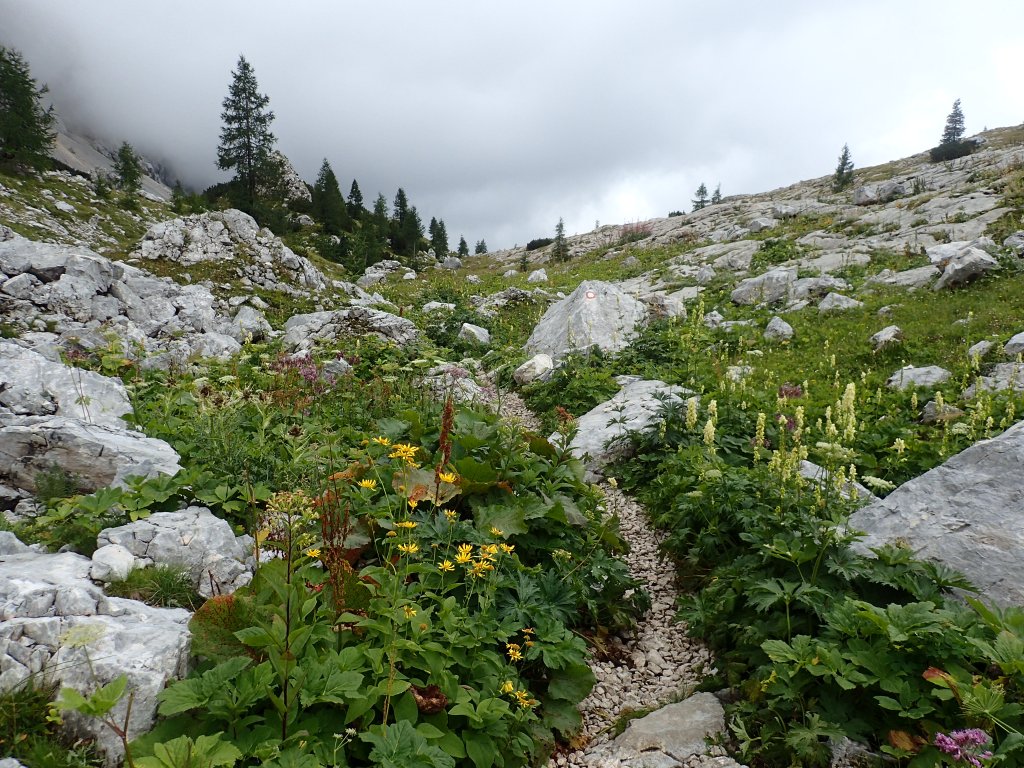
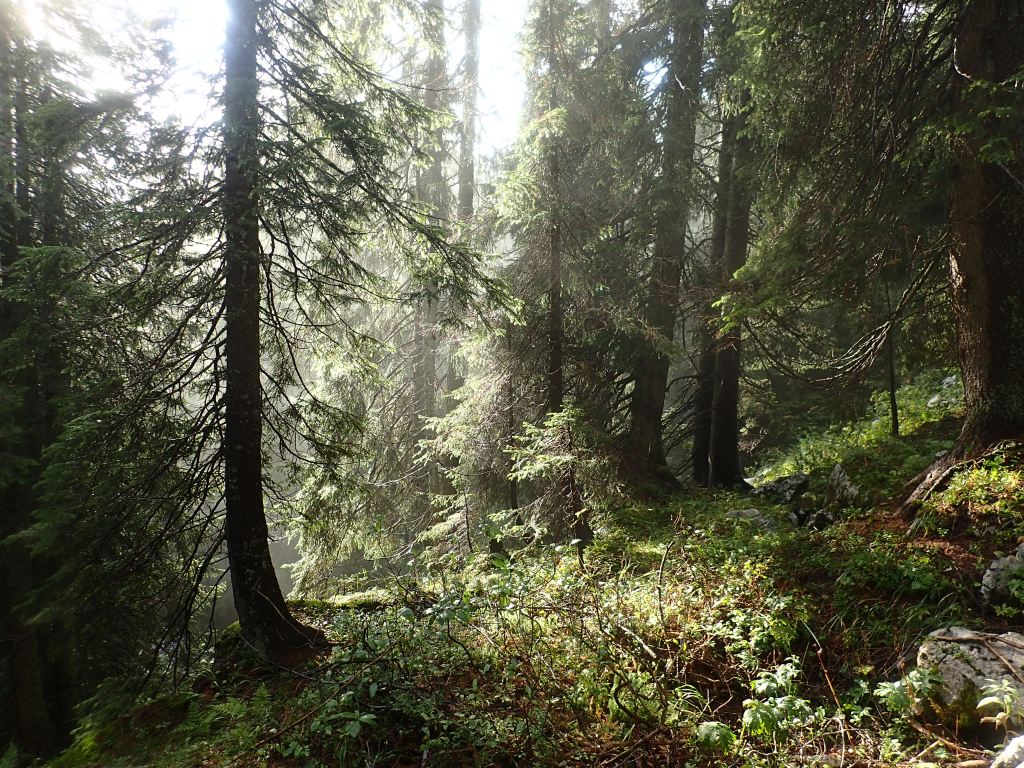
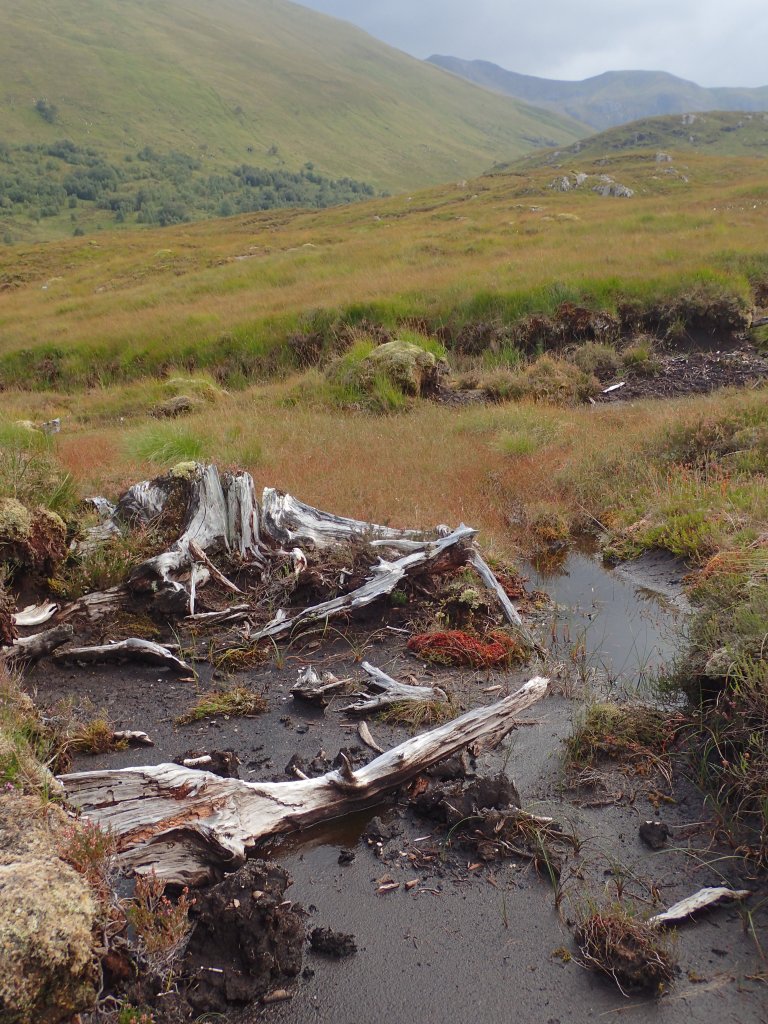
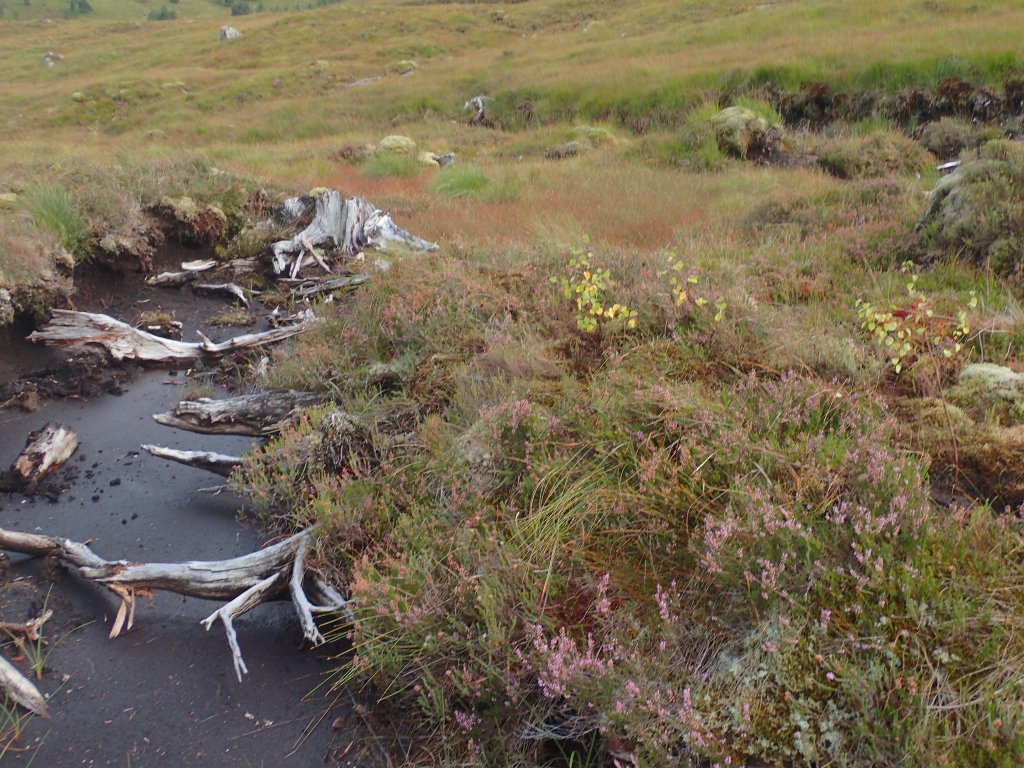
A week later, I was back in the Scottish Highlands – a landscape that I have loved for my entire life – and was surprised to find that my Alpine experience had not altered my joy at being in the bare Scottish mountains at all. To me, they have always seemed wild and beautiful, despite the ancient pine stumps emerging from open bog that was once lush forest. I am fully aware that I myself am a victim of what Daniel Pauly calls ‘Shifting Baseline Syndrome’: a gradual lowering of standards, with each new generation growing to accept increasingly poor environmental conditions as normal or ‘natural’, so that our expectations of the natural ecological state shift lower and lower. For example, those who grew up in post-war Britain remember driving on summer evenings through moth ‘snowstorms’ so thick that the abundance of insect life had to be sponged off the windscreen the following morning. Such a phenomenon is unheard of and unknown by the millennial generation – what we do not know, we do not miss.
This perhaps explains why Britain, arguably the world’s most nature-loving country, is also one of the most nature-depleted, ranking 189th out of 218 countries according to the 2016 State of Nature report. We British cherish our countryside, our hedgehogs and songbirds, largely unaware that more than half of our wildlife species have declined drastically over the past 50 years, or that 20% are in danger of extinction within the next decade.
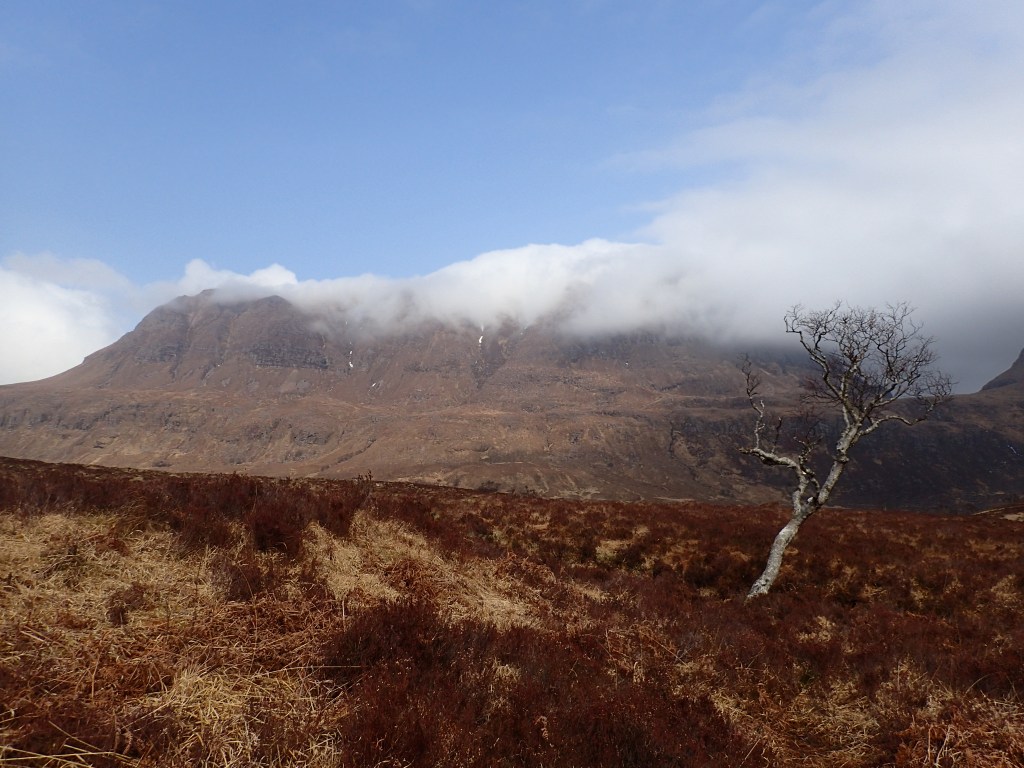
The tragic state of the British countryside is why rewilding has gained such traction amongst many conservationists. Countless projects are already underway, including the extraordinary Knepp project in Sussex, and Scotland’s flagship Cairngorms Connect project in Glen Feshie. Scotland’s rewilding movement is coordinated by Scotland: The Big Picture, a coalition of environmental organisations whose vision is for ‘a vast network of rewilded land and water across Scotland, where wildlife and people flourish’. As this goal indicates, it is important to acknowledge that the rewilding process itself inevitably requires significant human involvement, quelling the popular notion that rewilding aims to restore some kind of ‘natural’ (ie. human-free) state.
In the Scottish Highlands, a key problem that rewilders seek to overcome is the artificially high red deer population which, lacking natural predation from wolves and fed by shooting estates through the harsh winter months, has spiralled out of control. Overgrazing maintains the treeless slopes, initially created by deforestation from centuries of human pressure, that are so typical of Highland landscapes. Human control, through targeted culling and erection of deer fences, is therefore essential to remove grazing pressure and allow regeneration of native woodland. Deer fences themselves create new problems: not only do they look unnatural, but they are expensive to build and maintain, and can kill rare birds like the capercaillie which fail to see the fences before they fly into them. They also create isolated pockets of woodland, leaving the remainder to the mercy of the deer.
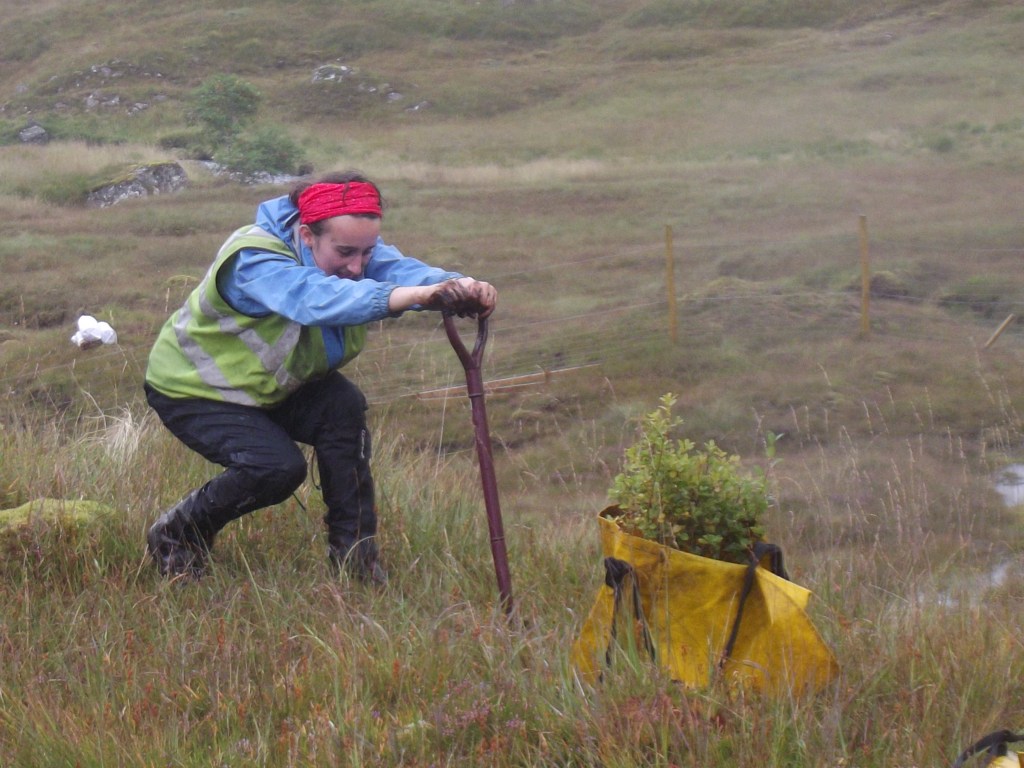
In many places, the ecosystem is so degraded that fencing alone is not enough, and recovery can only be achieved through actively planting trees. Again, this process is enacted by humans, usually in the form of spade-wielding volunteers. The necessity of such interventions proves the argument that rewilding cannot be separated from human actions. In truth, it is a fundamentally man-made process, in which humans make choices to designate separate areas of ‘wild’ and ‘non-wild’ land. Yes, rewilding aims to kickstart natural processes to allow ecosystems to flourish under their own steam once more. But we must not make the mistake of leaving people out of the process. As well as being factually incorrect, this would constitute a grave error that could be the undoing of the rewilding movement.
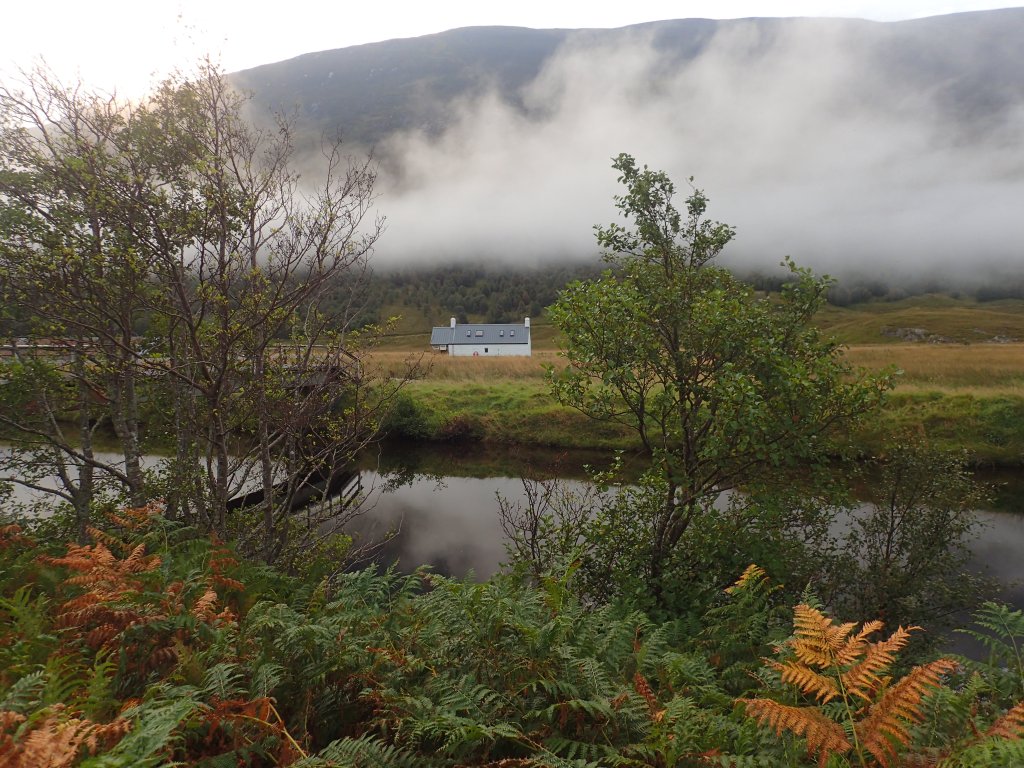
“The Scottish Highlands are not a wilderness … but a very much lived-in landscape”
If rewilding projects are to be successful, they must include people in their vision of ecological restoration. In Scotland, a country still deeply scarred by the atrocities of the Highland Clearances, in which thousands of subsistence farmers were forcibly removed from their ancestral lands, the perception of separating people from the land to make way for rewilding can arouse strong negative emotions. Therefore, rewilders face the challenge of avoiding falling into the trap of ‘fortress conservation‘, which has historically resulted in the forced eviction of indigenous and local peoples in pursuit of a false vision of pristine, human-free nature. Unfortunately, there remains a widespread misconception that rewilding involves fencing people out, which partly explains why the idea is strongly opposed by many local stakeholders from sheep farmers to recreational users. These concerns are highly valid, and there is a fine line to be trod between allowing ecological processes to flourish and allowing local people to flourish. The Scottish Highlands are not a wilderness, as some would like to imagine, but a very much lived-in landscape. Therefore, it is essential that local people are part of the process, and able to genuinely benefit from rewilding. Any project that naively attempts to create some sort of idealised wilderness, free of human influence, is ultimately doomed to fail.
And finally, there is the question of our relationship with the land. Perhaps because of Shifting Baseline Syndrome, there are many people, myself among them, who love the Highlands the way they are – barren, treeless, and what some would call bleak – but beautiful nonetheless. For most of the British population, Scotland is already wild, and without witnessing the vibrant biodiversity that still remains in places like the Slovenian Alps, how could we be expected to think otherwise?
Perhaps the answer lies in the precious fragments of surviving Caledonian pine forest that cling on in certain places, such as the fringes of the Cairngorms and the slopes of Glen Affric. Or the emerald underworld of steep-sided glens, carved out by raging mountain burns, where the slopes are too steep for deer and sheep to reach, and twisted mossy birch trees survive in secret. The soft roar of the wind in the pines, the scent of wet undergrowth rising from a dense understory of bilberry and rowan, speaks of a different age when red squirrels could cross Scotland from Lockerbie to Lochinver without touching the ground. To those accustomed to the UK’s windswept open heights, it feels like stepping into a different country. All over the Highlands, eroding peat hags, lacking forest roots to bind the soil together, creep back to reveal the fossilised stumps of ancient pines jutting towards the sky, telling us just how far those forests used to spread.
It is here that one may catch a glimpse of what Scotland once was – and what it might be again.
 Musings on Mountains
A fascinating subject…the prevalence of sheep on the hills is also an issue. Traditionally, crofters raised the black cow. How can sheep farming be reconciled with rewinding?
LikeLike