Stepping into Narnia
The dramatic resurgence of nature in a Scottish glen
Descending into the glen is like stepping from a barren desert into an oasis of life. Sweaty, midge-bitten and footsore, at the end of a multi-day expedition through the Cairngorm Mountains, we take in our surroundings in a daze. Lush wildflower meadows and thickets of verdant young birch and Scots pine are watched over by ancient knarled grandmother pines, while butterflies dance in clouds of abundance.
Through the trees, a stone bothy appears; washing is drifting from a line in the hot August breeze, and an old man pauses trimming the grass around the building to approach us. “Come in for a cup of tea!”
We were scarcely able to believe it. We had, it seemed, strolled into Narnia.
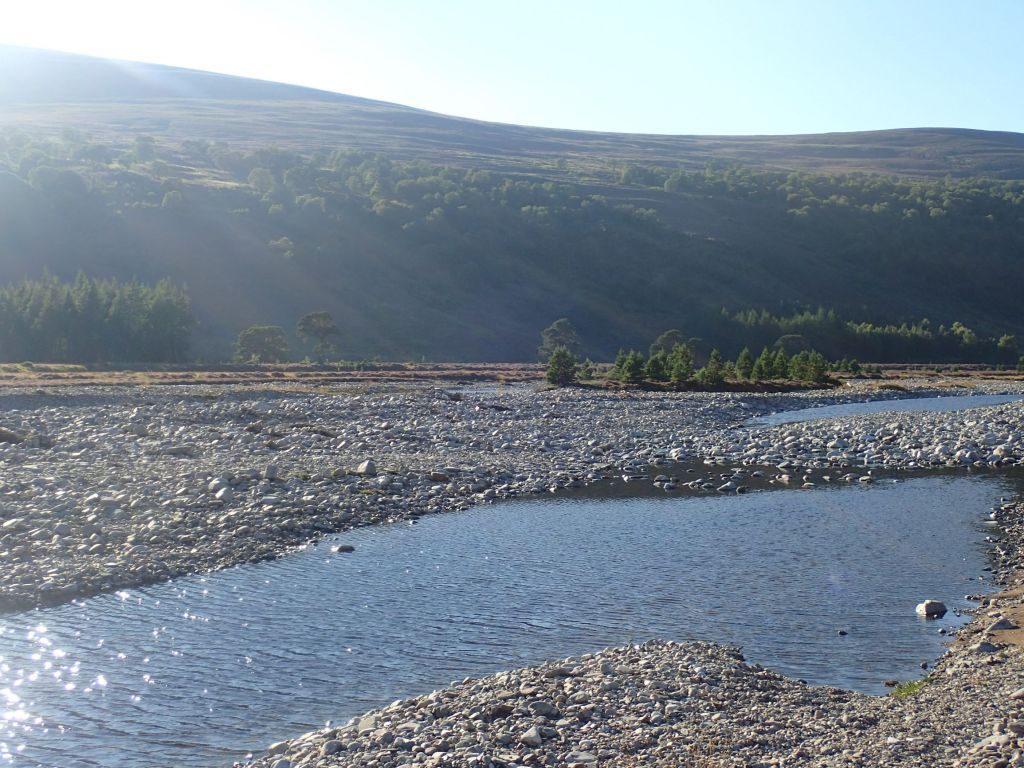
Glen Feshie is a 45,000-acre estate in the western Cairngorms. Bought by Danish billionaire Anders Povlsen in 2006 and managed by local organisation WildLand Limited, the glen is now Scotland’s largest and most spectacular rewilding area. In just 14 years it has been transformed from the deer-ravaged desert of heather and tussock which characterises much of the Scottish Highlands, to a regenerating landscape exploding with life. The richness of its ecology, in stark contrast to the surrounding hills and glens, is tangible.
This dramatic transformation has been achieved primarily through intensive deer culling, maintaining a population density of 2 per square kilometre within the glen (compared to an average of 10.5 per square kilometre across the Highlands, and 20 per square kilometre in some deer stalking estates). The only large herbivores currently living in Glen Feshie are a couple of female roe deer and three semi-feral white horses. Unlike the expensive and unsightly deer fences often used to encourage forest regeneration in Scotland, this strategy maintains some natural grazing at a sustainable level, mimicking the effect of extinct predators such as bears and wolves, and giving the ancient pines a chance to regenerate.
The extraordinary process at work in Glen Feshie is part of a larger project called Cairngorms Connect, whose 200-year vision for habitat restoration is unparalleled in scope and ambition within the UK. By the year 2261, it is hoped that the region will be the best example of oceanic boreal woodland in Europe. Although 2261 may seem a long way off, the changes that have already taken place in 14 years are mind-blowing. With its dramatic braided river system and lush forest, the glen feels more like somewhere in North America than the UK.
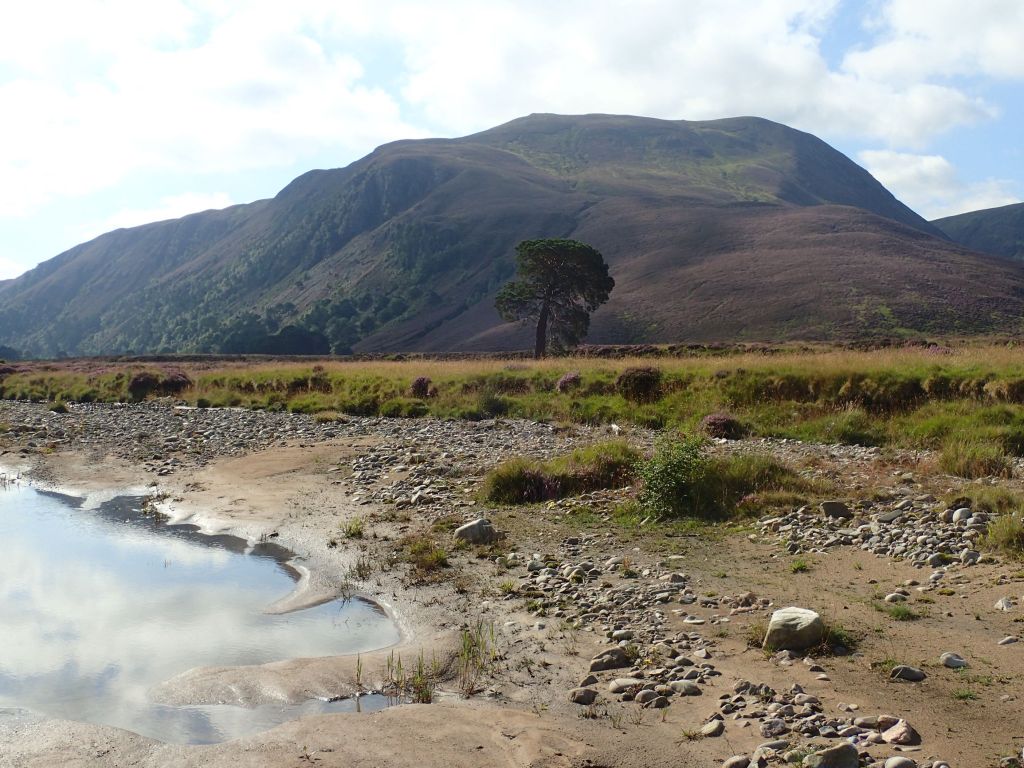
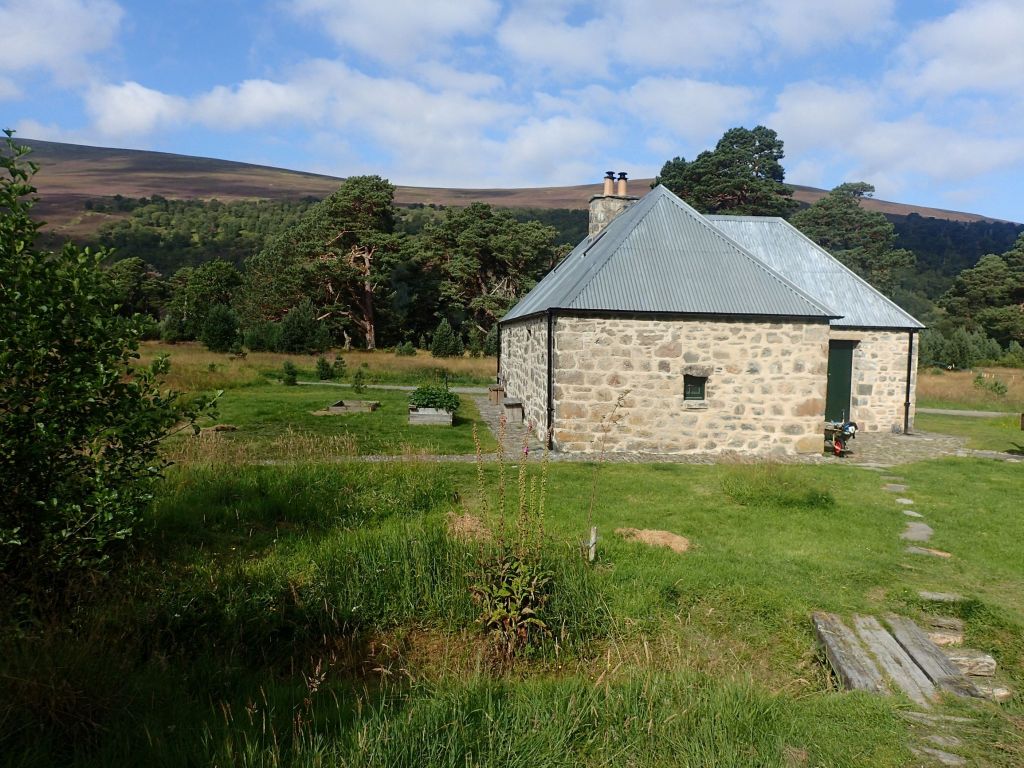
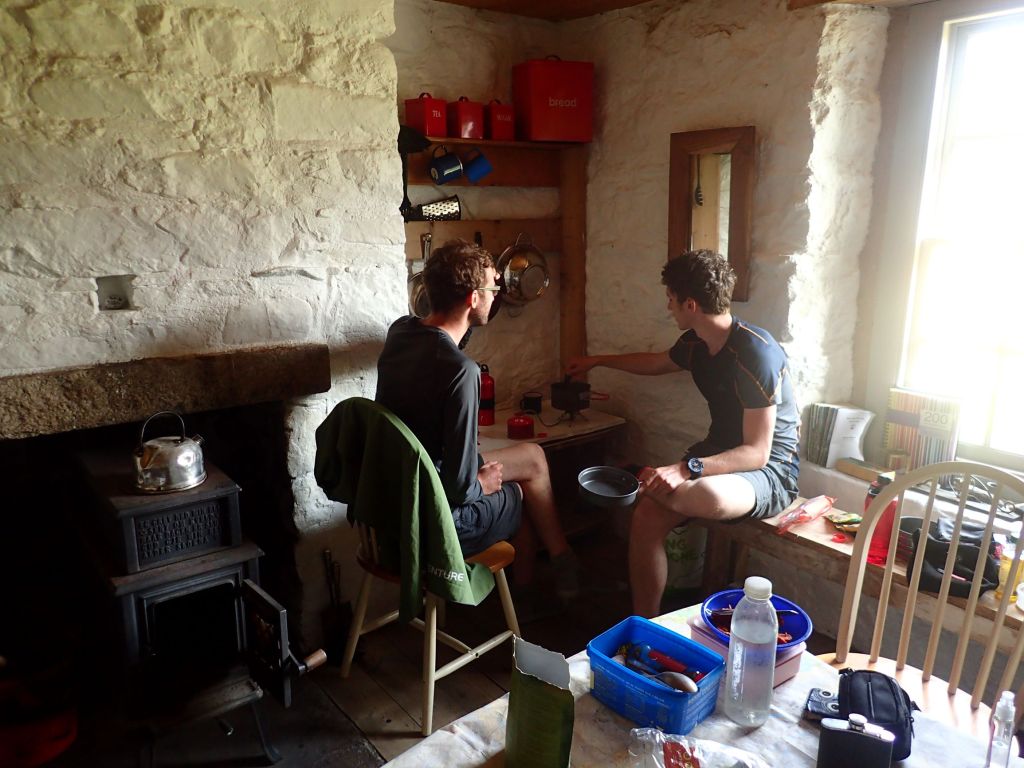
What makes Glen Feshie so special, however, is its accessibility. There are no fences, no parking fees, and no visitor gates – the only barrier to entry is the 6km walk-in from from the nearest tarmac road. In addition to accommodation at Glenfeshie Lodge, the freely-accessible bothy is a haven for anyone who wanders into the glen. Refurbished by Povlsen to an impeccable standard, and carefully maintained by its caretaker, Lindsay, this humble dwelling which once hosted a party for Queen Victoria feels like a loved and welcoming home. Boasting several un-bothy-like luxuries such as two wood-burning stoves and even a toilet block, it was so comfortable that we spent two nights there – partly to escape the ferocious midges. Regardless of the fact that bothies are officially ‘closed’ due to coronavirus, Lindsay was clearly delighted to welcome us in, and made us feel immediately at home. Before long we found ourselves sharing a bottle of prosecco and a dish of strawberries with him and another walker, feeling as if we had walked straight into an Enid Blyton novel.
Lindsay explained to us that he had spent his 30 years of retirement looking after the bothy and repairing the path network in the glen, in the hope that visitors would remember it and return. His love for the place was evident in the way he spoke, and after wandering the meadows by the banks of the River Feshie, I could see why.
Rewilding is a controversial topic, often associated with elite land capture at the expense of local people and their livelihoods. Despite being owned by a foreign billionaire, Glen Feshie feels very different. Anyone is free to walk in and put up a tent, while local people are employed to maintain paths, control the deer population, and monitor the extraordinary ecological changes taking place. In the Pine Marten Bar a few miles up the road, a local man told us that Povlsen is generally perceived as a ‘good guy’, whose consideration and inclusiveness seem to have won him the respect of local residents. Given that Povlsen is the largest land-owner in Scotland, with 13 estates to his name, this local positivity is a good sign.
On our final day in the Cairngorms, we set out from the bothy to climb Creag na Caillich, a 712m peak overlooking Glen Feshie. Resting on the summit in thick, soup-like summer heat, we gazed out across miles of open hillside and denuded glens. The creep of green up the flanks of Glen Feshie below us stood in stark contrast to the surrounding estates, where deer numbers have been maintained at artificially high levels to support the lucrative stalking industry.
According to Lindsay, part of this area to the south and west of Glen Feshie has also been bought by Povlsen, and is part of the wider Cairngorms Connect project. One day, this land, too, will see a reawakening of life, stabilising the soil above Glen Feshie and softening the river’s dramatic changes in course which have destroyed sections of footpath and come close to flooding the bothy. This process will also enable restoration of badly-eroded peat bogs, sequestering carbon rather than losing it to the atmosphere.
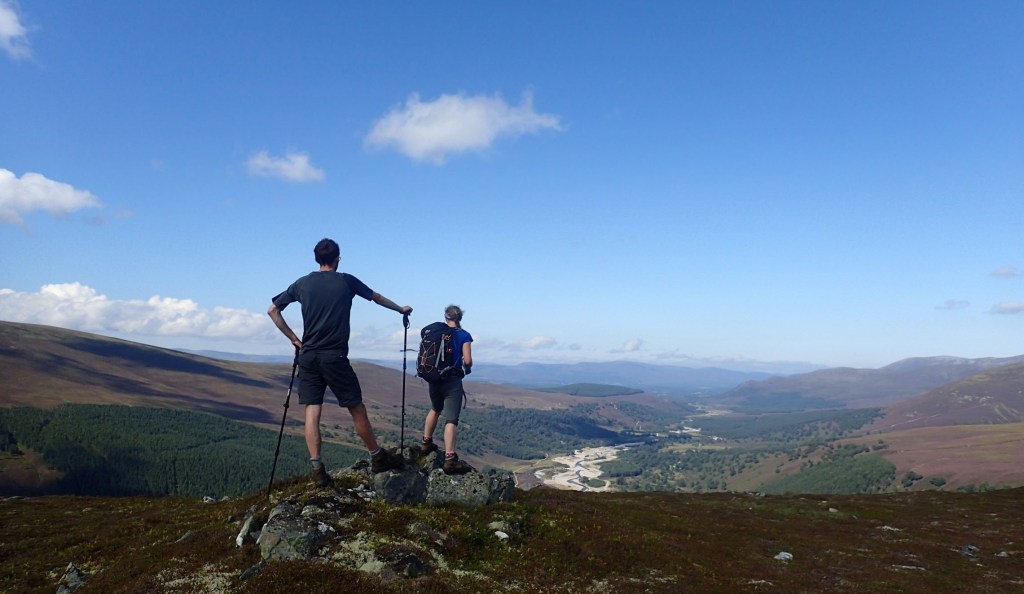
From Creag na Caillich, it is clear that the march of trees is already underway – but they still have a long way to go. After centuries of overgrazing, recovery will take further centuries. Those of us alive today will never see this part of Scotland restored to its full ecological potential.
But already Glen Feshie offers a unique insight into a different world, or perhaps the beginnings of one. It shows us that even in a few short years, nature can spring back – if we give it the chance.
 Musings on Mountains