Finding the wild closer to home
Sometimes in the most unexpected places …
The wild is a strange idea. To the Western mind, it tends to conjure all sorts of images – from the medieval image of a dark forest haunted by death itself, to (more recently) an Eden-like paradise to which we might escape from our stifling urban lives. Originating from the Old English words wild and deor, meaning a place of wild beasts beyond the control of man, the ‘wild’ or its grander cousin ‘wilderness’ have become synonymous with places untouched by humanity. As the Anthropocene advances and such places become fewer and further between – arguably ceasing to exist altogether, due to our profound influence on the global atmosphere – the notion of ‘wild’ and what it means in the modern age has come under close scrutiny.
For many people in Britain today, wild places are simply those that exist beyond the usual realm of daily life: dramatic, unpeopled landscapes, such as storm-wrecked beaches on the Outer Hebrides, perhaps, or the soaring glens and peaks of the Scottish Highlands. They may not be free from human influence – far from it – but to those of us who know no different, they as close to wild as you can possibly get on this crowded island (see my post on rewilding for a more detailed discussion).
The fact that such places still exist, enshrined as National Parks or Areas of Outstanding Natural Beauty, is a godsend to countless burnt-out city dwellers. As John Muir, the grandfather of the modern environmental movement, wrote knowingly more than a century ago: “‘thousands of tired, nerve-shaken, over-civilized people are beginning to find out that going to the mountains is going home; that wildness is a necessity”. In today’s fast-paced world of endless screens, Muir’s timely observation rings truer than ever. Whether it’s nipping up to the Highlands for a weekend from London Euston on the Caledonian Sleeper train, or driving up to the Peak District from Manchester or Birmingham for a glimpse of far horizons and the clean rush of upland air, access to the wild is a source of peace and solace for thousands.
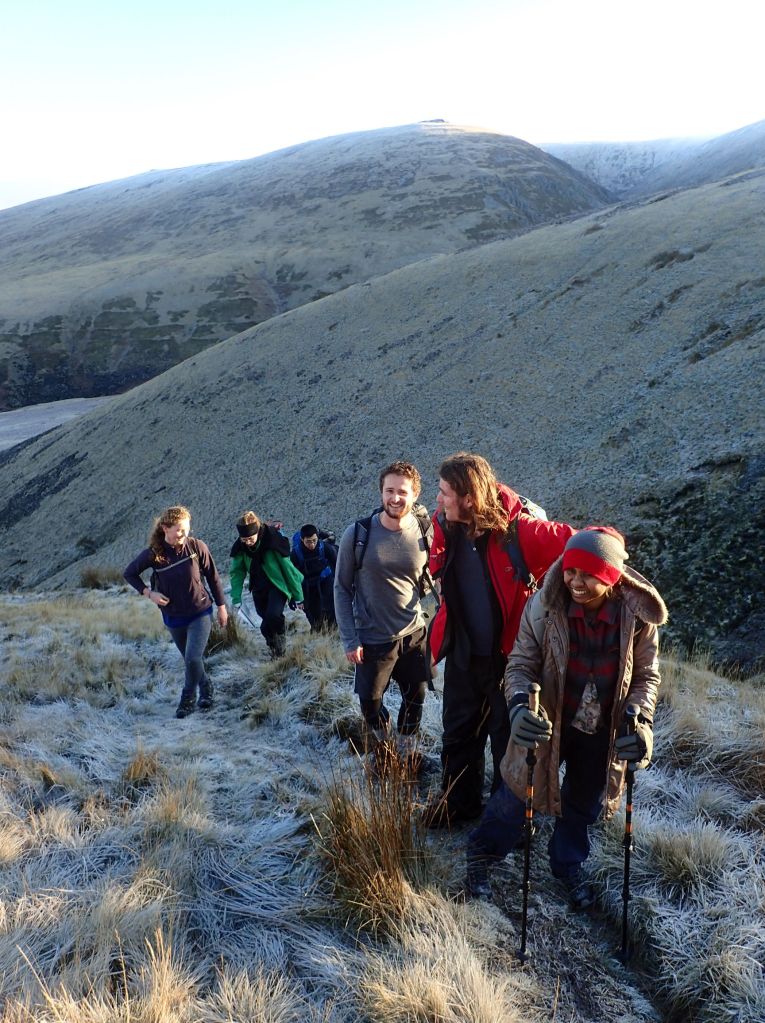
I myself have found that escaping the frenzied activity of Cambridge term-time for a weekend in the Lake District or Snowdonia with the University’s hillwalking club leaves me feeling calmer, steadier – more alive. Hitting the busy A1 on a Friday evening and following the signs to ‘THE NORTH’ is a feeling like no other, setting me quivering with almost uncontainable excitement.
And yet in the glorious spring of 2020, going to the mountains is impossible. Millions of people are quarantined amidst concrete, brick and glass, some without even a garden to provide some solace. Although lockdown is essential and public health is rightly the priority, losing access to wild places has still come as a major blow to those of us for whom going to the mountains is going home. The British Mountaineering Council advised to put hillwalking and climbing on hold weeks ago, and now travelling even short distances to access green spaces is impossible. As I wrote shortly after lockdown began, these special places will always be there, and will still be there to welcome us home when this is all over. But as no-one knows when that time will come, how can we keep connected to the natural world – particularly those of us who are stranded in cities – at a time when we need the peace of wild places more than ever?
While pondering this question, I realised that the potential answer lay in an idea, sparked by a book I’d read long ago, which had remained lodged in my mind like a determined seed ever since. It seems that now, years later, prompted by the extraordinary times we’re living through, that seed has germinated.
I first read The Wild Places by Robert Macfarlane in 2016 during a very dark time in my life; a time when I too was unable to go to the mountains due to illness. Macfarlane’s exquisite depiction of wild landscapes helped me hold on to the light, and has remained with me ever since. Part memoir, part meditation on the meaning of wildness, Macfarlane’s journey through some of Britain’s most beautiful landscapes ultimately leads the reader to form a very different idea of what constitutes a wild place. It all begins as Macfarlane crosses The Burren, a limestone pavement in County Clare, Ireland:
“Near the centre of the pavement, we reached a large gryke running north to south. We lay belly-down on the limestone and peered over its edge. And found ourselves looking into a jungle. Tiny groves of ferns, mosses and flowers were there in the crevasse – hundreds of plants, just in the few yards we could see, thriving in the shelter of the gryke: cranesbills, plantains, avens, ferns, many more I could not identify, growing opportunistically on wind-blown soil. The plants thronged every available niche, embracing one another into indistinguishability. Even on this winter day, the sense of life was immense. What the gryke would look like in the blossom month of May, I could not imagine.
This, Roger suddenly said as we lay there looking down into it, is a wild place. It is as beautiful and complex, perhaps more so, than any glen or bay or peak. Miniature, yes, but fabulously wild.”
Robert Macfarlane, The Wild Places (Granta Books, 2007, p.168)
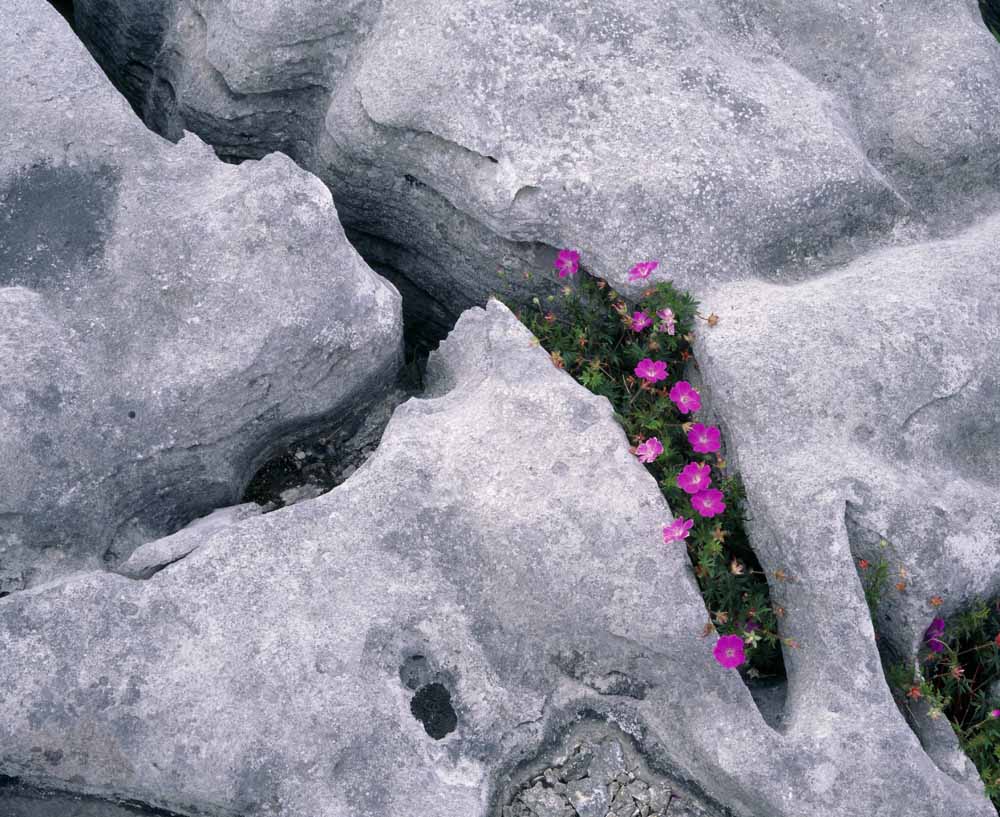
Perceiving this miniature jungle tucked into a crack in a limestone pavement as a ‘wild place’ contradicts our traditional understanding of wilderness. Although far from John Muir’s enduring vision of vast, pristine mountains that has proved so influential in how we perceive wild places, small pockets of life like Macfarlane’s gryke are far more accessible in this day and age – and equally as wild. Wherever we are, life can always be found close by: creeping through tarmac, sprouting from cracks in stone walls, bursting exuberantly from the clasped buds of trees as spring takes the land by storm. Unable to forget his friend’s comment about the gryke, Macfarlane goes on to develop a new idea of what wildness can be, far from the bleak drama of the Highlands:
“My own understanding of wildness had been altered – or its range had been enlarged. My early vision of a wild place as somewhere remote, historyless, unmarked, now seemed improperly partial.
It was not that places such as Hope and Rannoch, the last fastnesses, were worthless. No, in their stripped-back austerity, their fierce elementality, these landscapes remained invaluable in their power to awe. But I had learned to see another type of wildness, to which I had once been blind: the wildness of natural life, the sheer force of ongoing organic existence, vigorous and chaotic. This wildness was not about asperity, but about luxuriance, vitality, fun. The weed thrusting through a crack in a pavement, the tree root impudently cracking a carapace of tarmac: these were wild signs, as much as the storm wave and the snowflake.
There was as much to be learned in an acre of woodland on a city’s fringe as on the shattered summit of Ben Hope: this was what Roger had taught me.”
Robert Macfarlane, The Wild Places (Granta Books, 2007, p.316)
This is a vision of wildness that we can all connect with, no matter who we are or where we are. We do not have to go to the mountains to find the wild, because the wild is with us everywhere we go. Now, more than ever, it is important to remember this.
We may be in lockdown, but we are lucky to be allowed to go outside; that we still have the chance to find wild places in our streets or our back gardens. Even if the mountains are out of reach for now, there is so much to be discovered close to home. All that is wild can be encapsulated in a single flower.
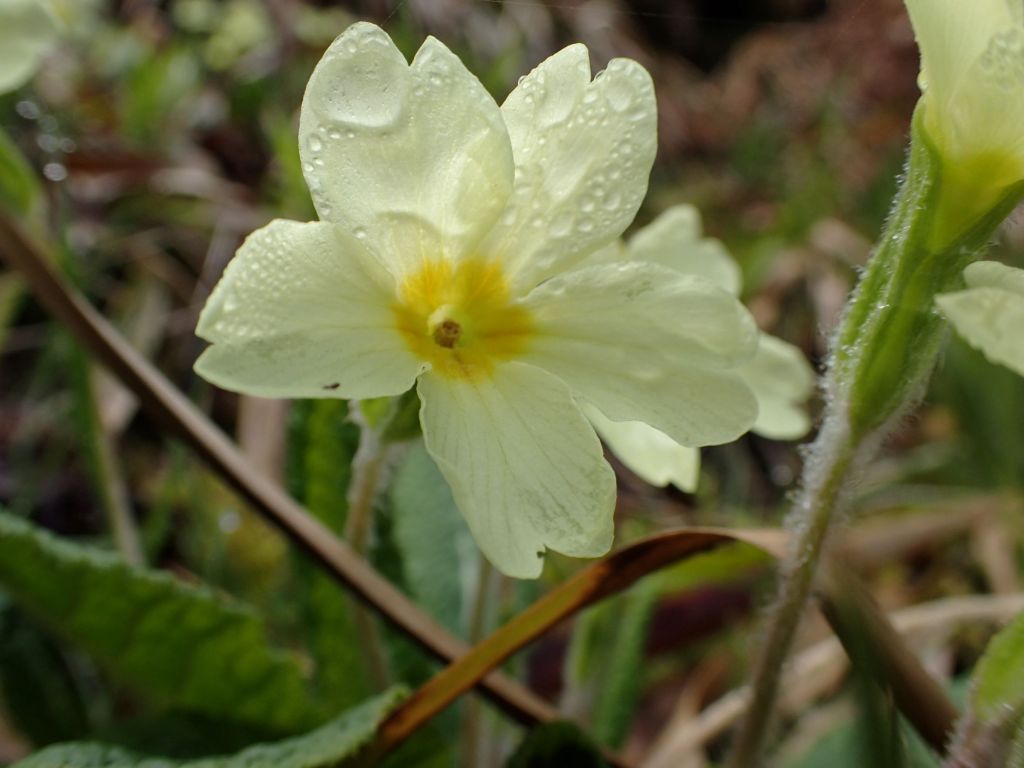
“I spent increasing amounts of time exploring the farmland and the copses within a mile or two of my home. The hedgerows, the fields and the little woods that I had once been so avid to leave behind for the far west and north, had come slowly to seem different to me – filled with a wildness I had not previously perceived or understood.”
Robert Macfarlane, The Wild Places (Granta Books, 2007, p.317)
 Musings on Mountains