Top twelve bits of kit for wild camping in the UK
How to make wild camping safe, responsible, and most importantly, enjoyable!
Wild camping is an experience like no other, ranging from ecstatic joy to abject misery. Here I share my top tips on how to make wild camping as enjoyable and comfortable as possible, based on my own experiences, which contain their fair share of both joy and misery! Oddly enough, it’s often the miserable experiences that stick out in your memory and teach you the most – and make the best moments worth it.
Wild camping refers to camping in a remote area, away from a campsite or any modern facilities like showers, toilets or shops. In Scotland, the Land Reform Act of 2003 allows the public the ‘right to roam’ on most unenclosed land, which means that you can camp more or less anywhere you like, as long as you behave responsibly and don’t pitch up in someone’s back garden. In England and Wales, the rules are more restrictive, and wild camping is technically illegal apart from in Dartmoor National Park, unless you seek permission from the landowner in advance. However, many people still camp in remote areas without causing any problems, which is usually fine provided you follow the wild camping code of conduct (see this useful post for advice on responsible camping).
Below I’ve put together a list of twelve essential items for wild camping in Britain, along with my recommendations for particular brands, with the requirements of a multi-day backpacking expedition in mind. I’ve also considered the weather conditions unique to our damp but beautiful island, which provide particular challenges when it comes to keeping dry. Of course I am by no means an expert, and the tips below are my personal opinions rather than solid fact – but I hope you find them useful, whether you’re new to wild camping or a seasoned veteran. I’d love to hear your own thoughts and opinions, so please share them in the comments section!
The illustrating photos were mostly taken by my wonderful sister and depict our not-so-wild garden as opposed to a genuine wild camp. We may be in lockdown and unable to actually go wild camping right now, but what better way to spend a sunny Easter weekend than to go pretend-camping in the garden?
1. Tent
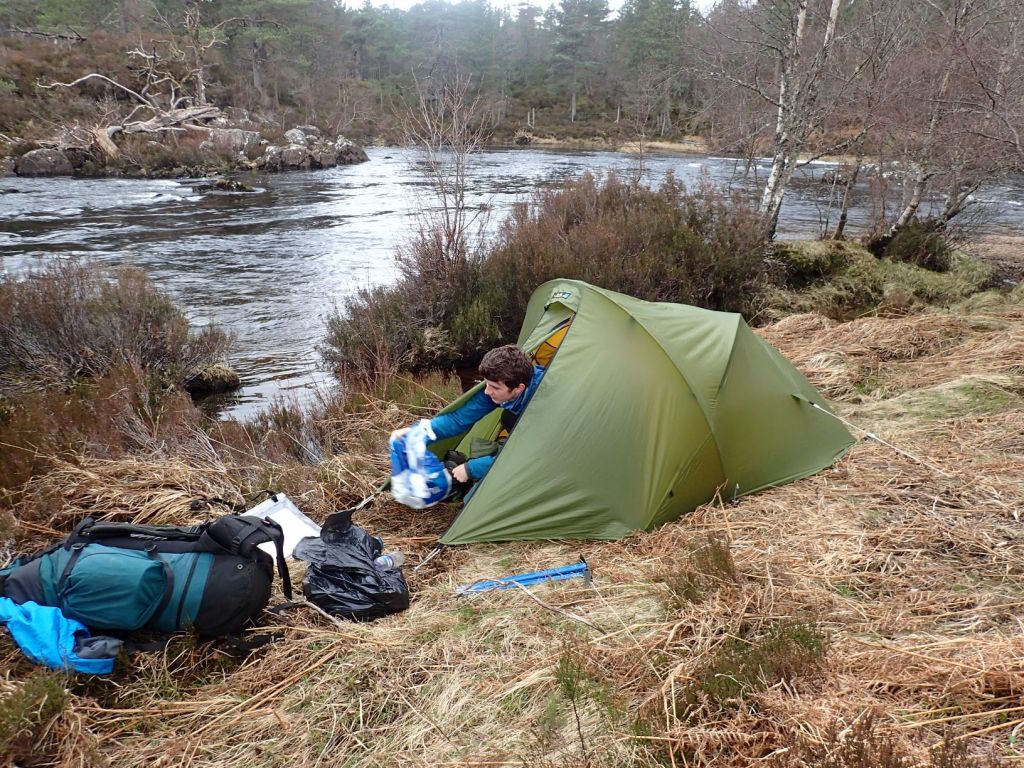
Of course, this goes without saying as an essential bit of kit. Tents vary enormously in size, shape, and price, so it’s worth doing your research thoroughly before buying one. I have always used my Dad’s old Terra Nova 2-man tent, which is about 30 years old and not quite as waterproof as it used to be, but has served me well through many adventures. Terra Nova still makes an almost identical tent; the design has changed very little, but the new materials are much lighter.
A compact 2-man tent, the Terra Nova Trisar 2 has just enough space for two people and their gear to fit inside quite snugly, which also makes it very cosy as it doesn’t take long for body heat to warm up the interior. It has a porch at one end, which is spacious enough to store boots, food, and cooking equipment. Easily accessible interior pockets at each side enable storage of important items like headtorch, map and toothbrush, while a third pocket at the back is handy for stowing the empty covers for tent, sleeping bag and mat. The only minor issue with this tent is that the inner is erected first – although this means it is very quick to put up, it can also be problematic if you’re setting up camp in the rain, as it’s difficult to keep the inner dry before putting the waterproof outer layer on. This problem can be mitigated by making sure that both people know the tent well in advance, and work together to pitch efficiently.
2. Sleeping bag
Again, an obvious one – although having a decent sleeping bag that is appropriate to the conditions you’re in can make or break an expedition. A bad experience with a too-thin sleeping bag can put some people off for life!
Keeping the weight down for backpacking expeditions is important, but what is even more important is warmth. It’s worth checking the comfort rating of your sleeping bag, and erring on the safe side. My lightweight summer bag is comfort-rated down to 4 degrees Celsius, but even in summer this can be a bit on the nippy side, particularly when camping at higher altitudes – I once spent an uncomfortably cold night in August just below the summit of Scafell Pike. Therefore, it’s worth having a decent 3-season sleeping bag that will do the job for most of the year. However, for serious winter camping, a proper winter sleeping bag is a must. In cold conditions, I opt for another piece of my Dad’s old gear – a voluminous down sleeping bag which was designed to keep him warm in -40 degrees Celsius conditions in Antarctica. Probably a bit overkill for the Scottish Highlands, but it is unbelievably cosy.
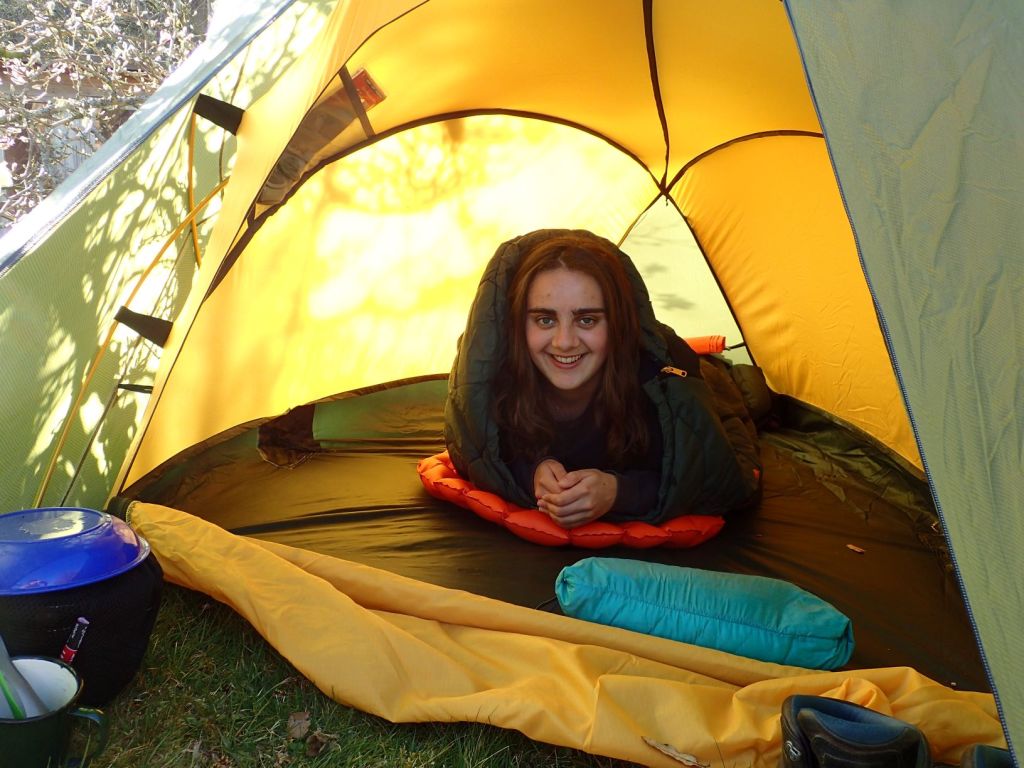
As well as a good sleeping bag, keeping warm at night is made vastly easier by eating a decent hot meal in the evening. My Dad passed me this pearl of wisdom after spending 2 years working in Antarctica: a full belly means a warm night, as it fuels your body to keep producing heat through the night. Scrimp on food, and you’ll spend the night shivering. Wearing more layers, particularly a hat, also helps.
A note on sleeping bag materials: down sleeping bags are gorgeously warm and incredibly lightweight, but tend to lose their insulating capacity as soon as they get wet. They’re great for cold, dry Alpine conditions – but in the UK, keeping your bag bone-dry is often impossible. Although slightly heavier for the same level of warmth, synthetic sleeping bags stay warm even when wet, with the added bonus of being significantly cheaper, which is worth bearing in mind when choosing a new sleeping bag.
3. Sleeping mat
The main point of a sleeping mat is not to provide a comfy mattress, but to act as an insulating layer between you and the cold ground – although having a mat that is also comfortable makes a massive difference! From my experience, the best of both worlds is provided by an inflatable mat, such as Sea to Summit’s ultralight range. In contrast to the classic foam rolls or self-inflating mats, which are heavy, bulky and far from comfortable, these little mats roll up into a tube the size of a 1 litre water bottle and weigh next to nothing, which makes a huge difference on multi-day trips when you’re carrying a heavy load.
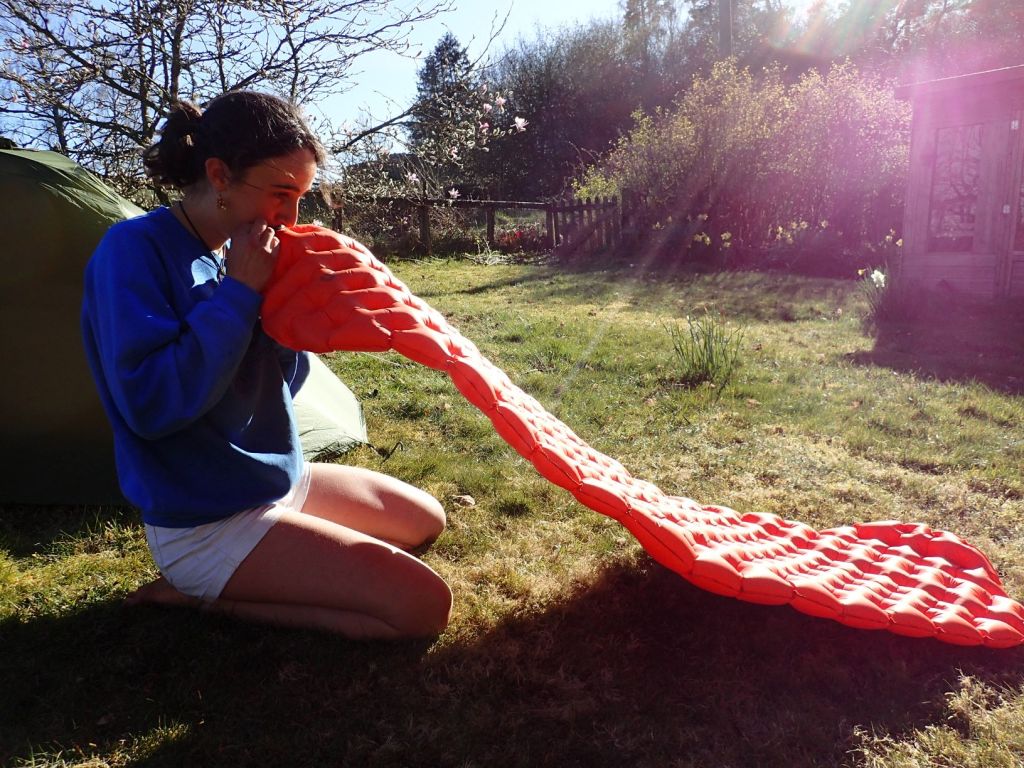
Despite its tiny size when rolled up, after a few seconds of puffing you suddenly have a beautifully springy, air-filled mattress that is both warm and comfortable. Although they are on the pricey side, this is something I would highly recommend investing in, as it will provide you with countless comfortable nights in wild places for years to come. My mat was one of the first bits of outdoor gear I saved up for and bought myself, and I have never looked back.
4. Camp shoes
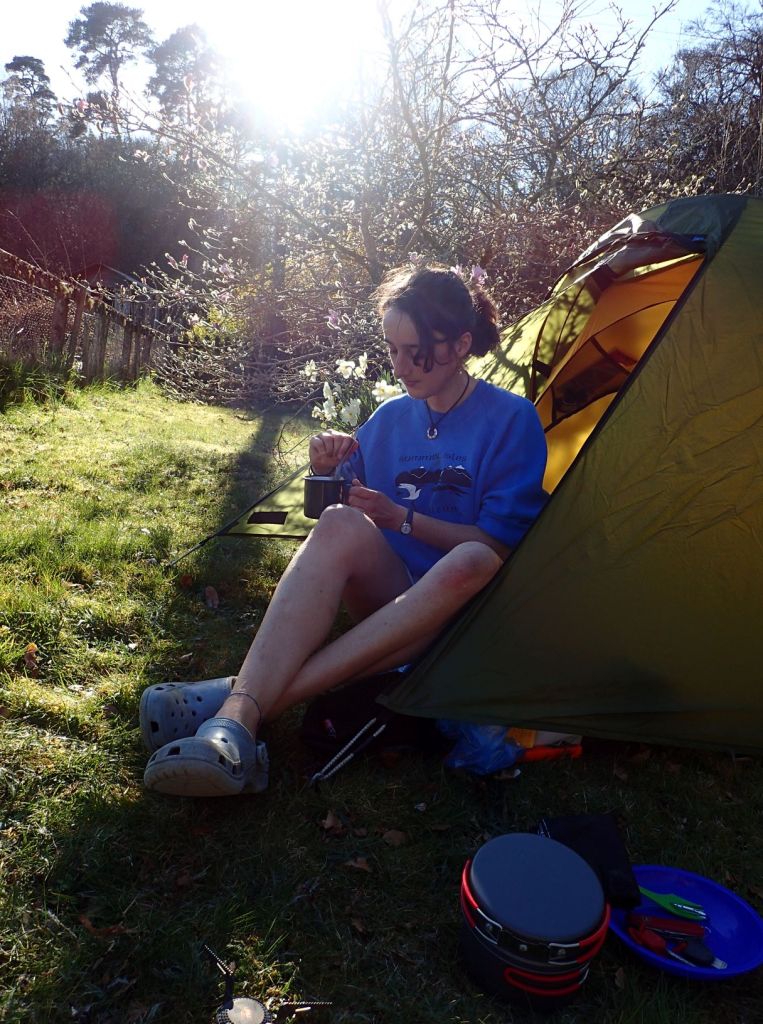
So Crocs may not be the trendiest footwear. Whenever I wear them around the kitchen at university, it seems to cause my stylish housemate intense physical pain. However, they are the perfect shoes for wearing in camp. A trusty pair of Crocs feels like a blessed relief when you take off your boots after a long day of walking, and they’re easy to slip on and off for mooching around camp in the evening, or popping out of the tent for the loo in the middle of the night. They have the added advantage of being lightweight, waterproof, and more or less indestructible. These properties mean that they are invaluable for crossing boggy ground to reach a loo-spot far away from the tents, as you can get them soaked without doing any harm and they will dry off immediately.
They can also be extremely useful for river crossings, particularly in remote parts of the Scottish Highlands where wading across burns during an expedition can be inevitable. Popping on a sturdy pair of waterproof footwear for the crossing will protect your boots from getting drenched and your feet from being pulverised. They can even be tied onto the outside of your rucksack for easy access, by hooking a carabiner or even just a piece of string through the holes.
It doesn’t have to be Crocs – a pair of sliders or even flipflops will do the same job. My last pair of camp shoes was a £0.99 pair of flipflops from Primark, which finally packed up during a trip to Norway last summer after three years of hard wear. I’ve been devoted to my Crocs ever since – fashion crime or not.
5. Stove and fuel
Opinions differ on what type of stove to go for. People tend to fall into one of three camps: the traditional Trangia, the simple Jetboil, or the classic gas burner. I personally prefer the latter, due to its versatility, reliability and ease of use.
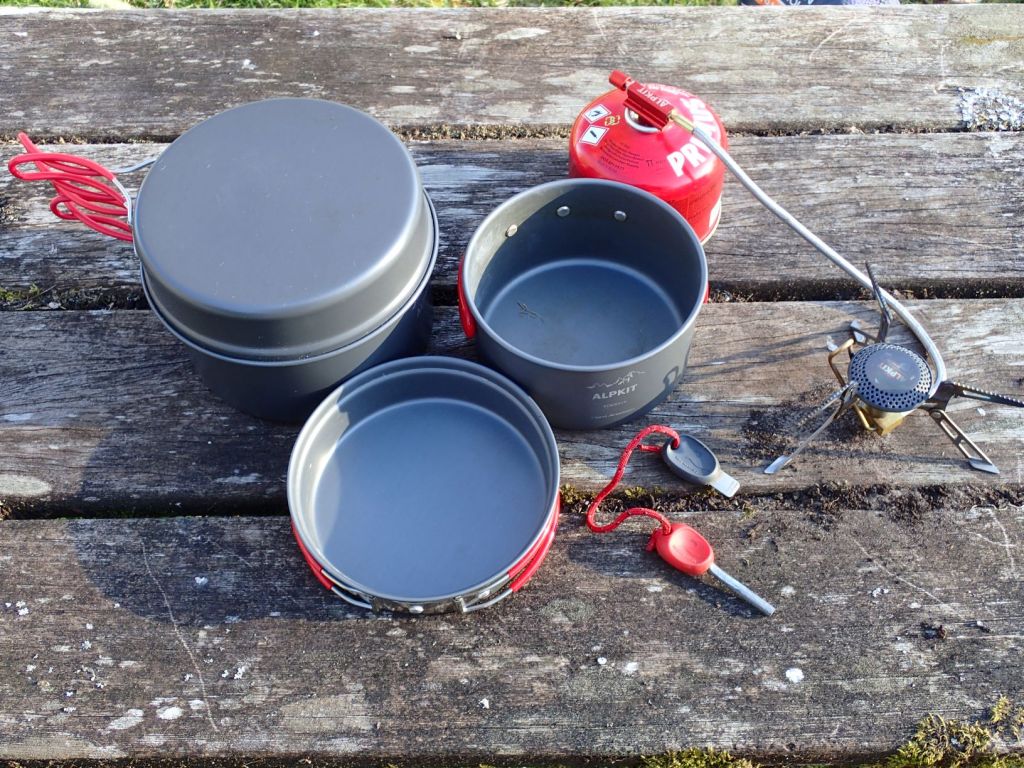
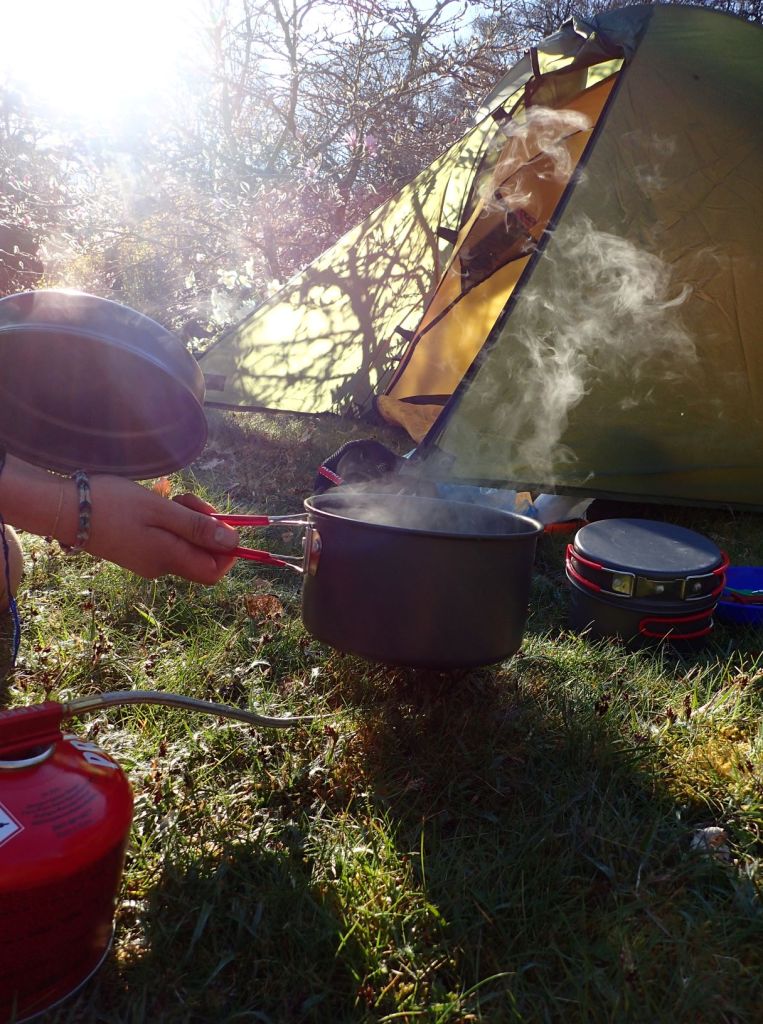
My stove and set of pans, purchased under expenses for a Geography field trip, are from the budget yet high-quality brand Alpkit, and are some of my most beloved bits of kit. The efficient gas burner heats up water extraordinarily fast, while the set of pans stack neatly inside each other with handles that fold away to fit the sides of the pan and create a compact set. The entire apparatus is quick to set up and compact enough to use inside the tent porch (with great care, of course) – a big bonus during foul or midgy weather, or if you just fancy a cuppa before getting out of bed.
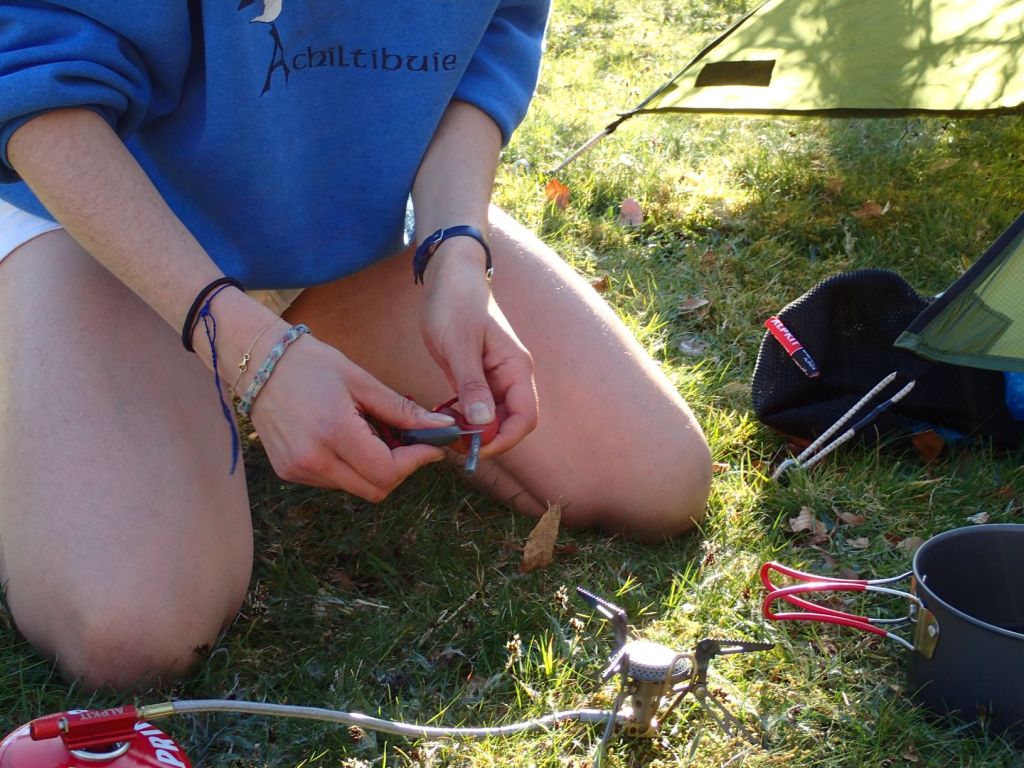
To light the stove, I use a firesteel rather than matches. This nifty bit of kit will last much longer than a box of matches, as well as being more compact, and unlike matches it doesn’t matter if it gets damp (which is quite likely to happen, at any time of year). Most importantly though, the feeling of striking the flint and instantly setting the gas burner ablaze feels very satisfying, unleashing a bit of inner Bear Grylls.
6. Bowl, cup and spork
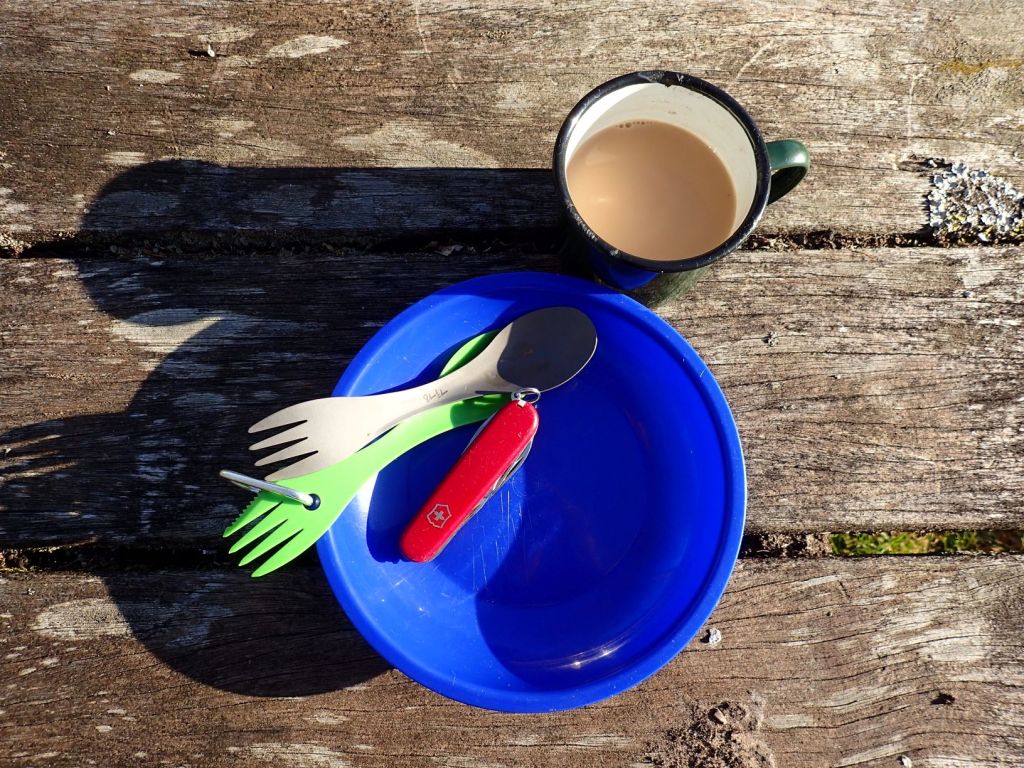
A camping staple that can be purchased very cheaply from most outdoor shops, a shallow plastic bowl can be stacked neatly with your stove and is perfect for serving anything from porridge to pasta. A simple tin mug is also great for hot drinks to keep away the chill during cold nights in the outdoors. I enjoy making Cup a Soup in my mug as a starter while waiting for the main course to cook, and of course cups of tea at every opportunity. A penknife is always a useful tool, for chopping ingredients and opening cans.
Finally, the brilliant invention of the spork covers every culinary need, including stirring, chopping, serving and eating. Plastic sporks are great and come in a wide range of bright colours so you’re less likely to lose it by dropping it in the grass. However, I’ve found they easily snap while digging peanut butter out of a jar – peanut butter becomes surprisingly solid at low temperatures, and I have sadly lost two sporks that way. I now have an indestructible titanium spork, which is a bit fancier but is also peanut-butter-proof.
7. Trowel and loo roll
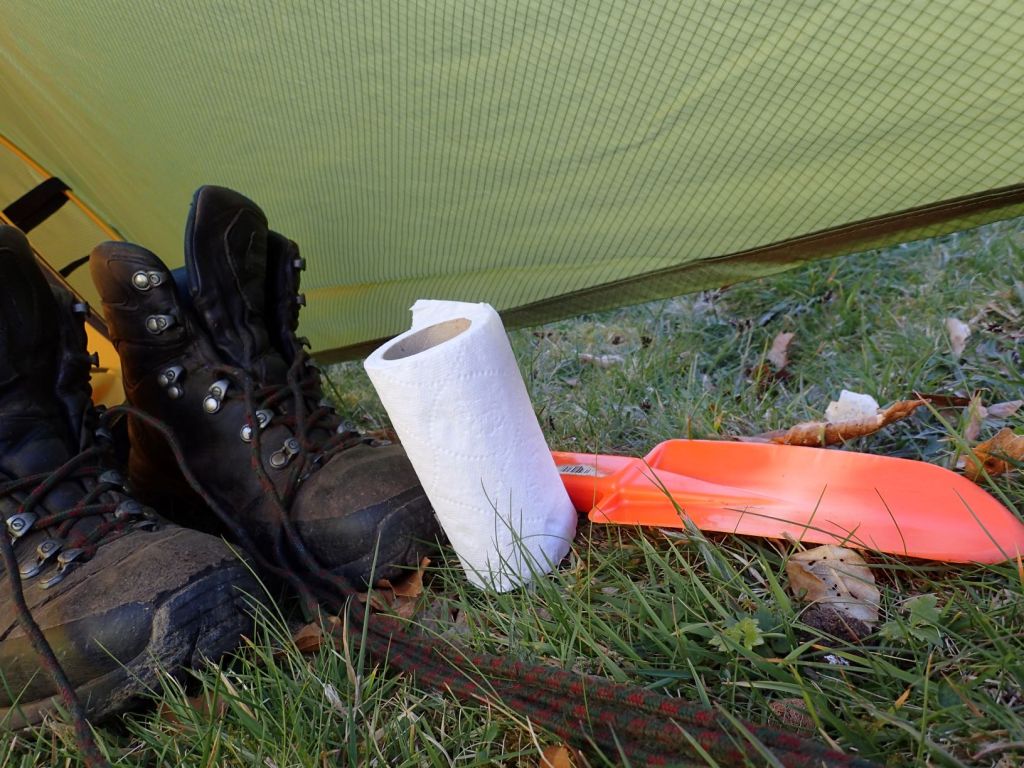
Perhaps not the most glamorous bit of gear, but a dynamic duo that is absolutely essential for any wild camper – especially if you plan to be out for a few days. Lightweight plastic trowels are fairly cheap to get hold of and can be easily slipped into a side pocket of your rucksack – mine was kindly given to me by a friend on my Mountain Leader Training course. Loo roll can be flattened and transported inside a waterproof plastic bag, near the top of your rucksack for easy access.
In general, it is best to avoid leaving bodily waste behind if at all possible, particularly the solid type. However, when out camping in remote areas, it is often inevitable that at some point you will need to empty your bowels. The best way to go about this is to pick a spot at least 100 metres away from any body of water and from where you have pitched your tent. Ideally, this should be downstream of where you are collecting water at your campsite. Once you’ve found the perfect spot, you should use the trowel to dig as deep a hole as you can. Once you’ve done your business in the hole, bury it thoroughly. Used toilet paper should NOT be buried, but placed in a bin bag and carried out with you to be disposed of when you’re back in civilisation. Which brings me to the next item on the list …
8. Plastic bin liners
The humble plastic bag is a crucial bit of kit for any expedition. They are incredibly versatile and come in use for the most surprising purposes. Of course they are important for storing all your rubbish until you can get rid of it in a bin, but they are also perfect for:
- Stuffing a wet tent into after a rainy night, to stop it from soaking the rest of your gear
- Protecting your boots from getting damp in the porch overnight
- Separating clean clothes from filthy ones that need a wash
- Keeping food organised and in one place – I often separate my food into two bags: one for dinner or breakfast food that needs cooking, and one for snacks and lunches to be eaten during the day
- Protecting your gear if (heaven forbid) your tent leaks. This happened to my friend’s tent once while camping on Skye – we came back to the tent after a long day on the hill to find our mats swimming in puddles of water. It was an unpleasant night, but it would have been a lot more unpleasant if we hadn’t protected our sleeping bags inside bin liners beforehand.
9. Drybags
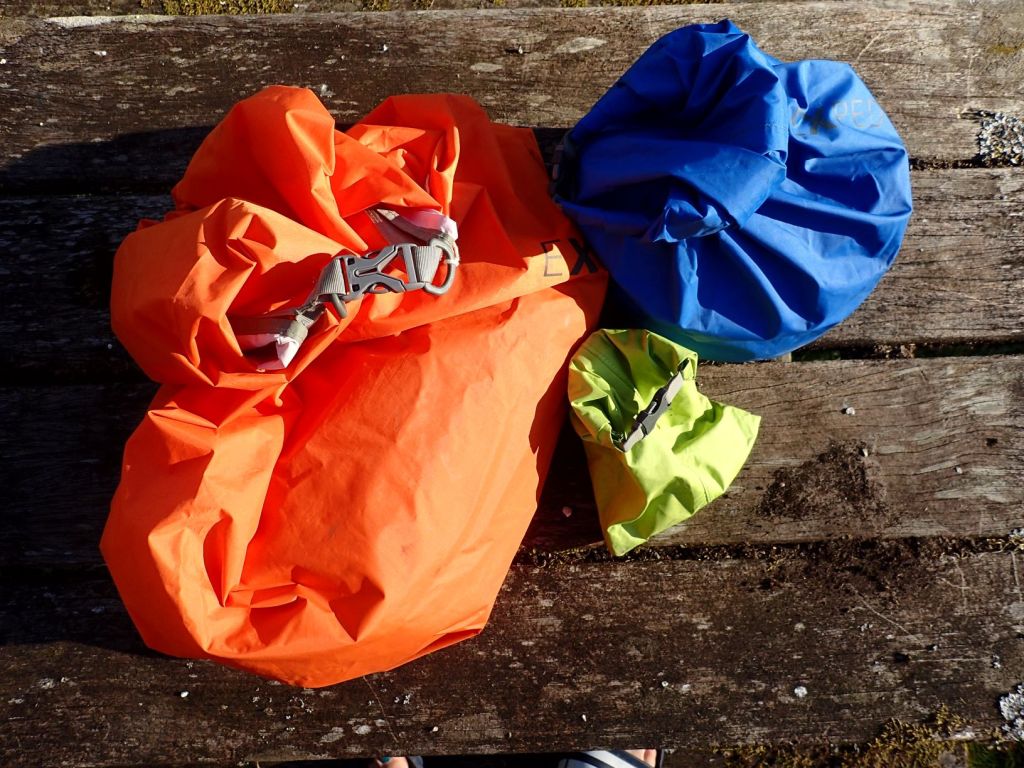
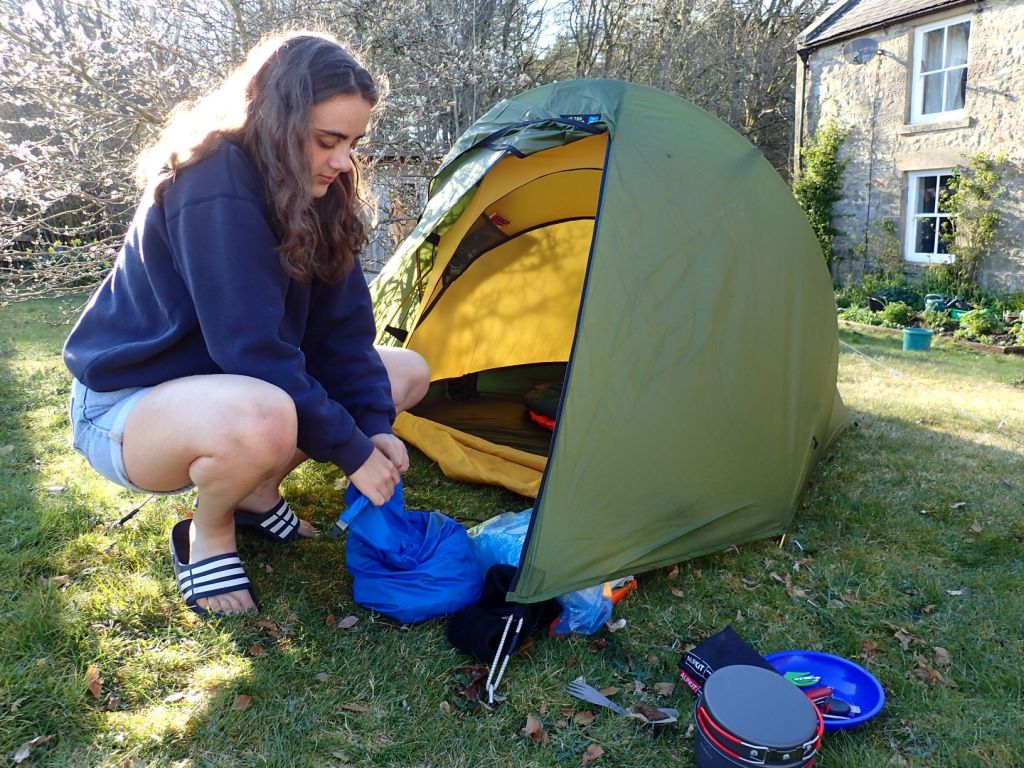
A more sophistocated step-up from the plastic bag, drybags are great for keeping dry anything that absolutely cannot get wet. For example, a down sleeping bag should be kept in a drybag when not in use, as should any electrical equipment like your phone, GPS unit, and charging wire. I usually store my spare clothes in a medium-sized drybag (shown here in blue), which helps to keep them neatly compacted and also forms a great pillow in the tent. Having a few drybags in different sizes is therefore very useful, although if the worst comes to the worst a plastic bag will do the same job.
10. Travel towel and soap
This is probably my Desert Island luxury item – while not strictly speaking essential, washing can make a huge difference to your enjoyment of a long multi-day trek, and your companions’ noses will probably thank you for it. Taking a dip in a stream or lake near your campsite is perhaps one of the most exhilarating aspects of wild camping. The feeling of emerging, clean and fresh, from crystal cold mountain water is indescribable.
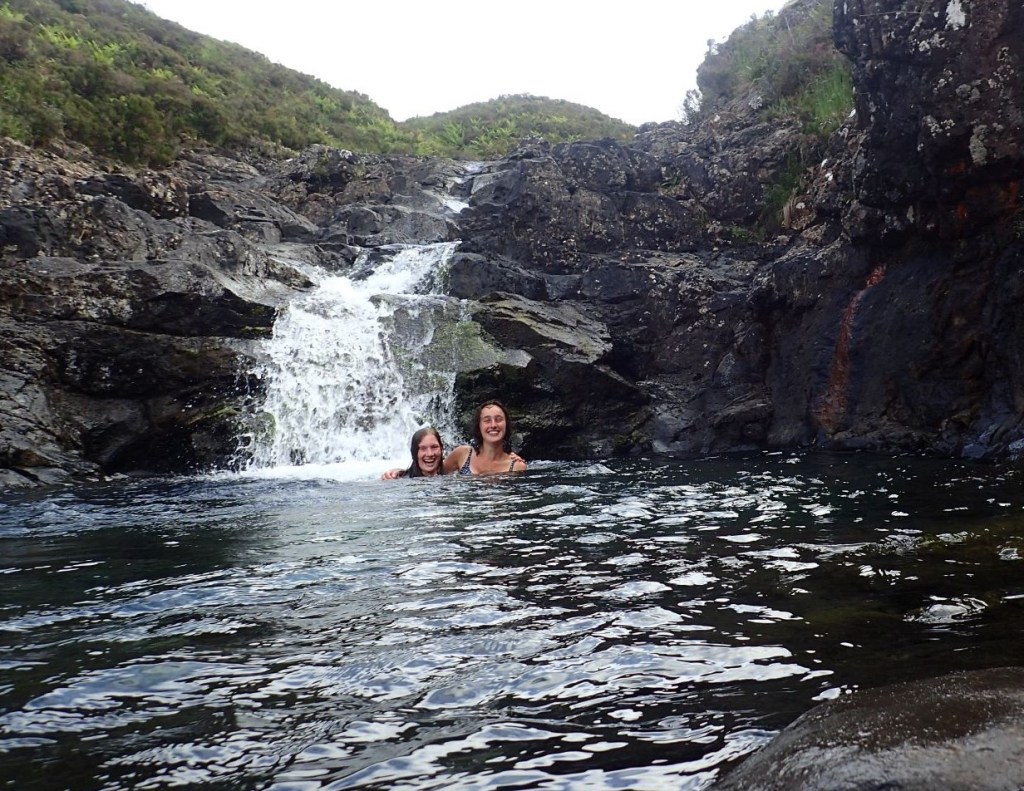
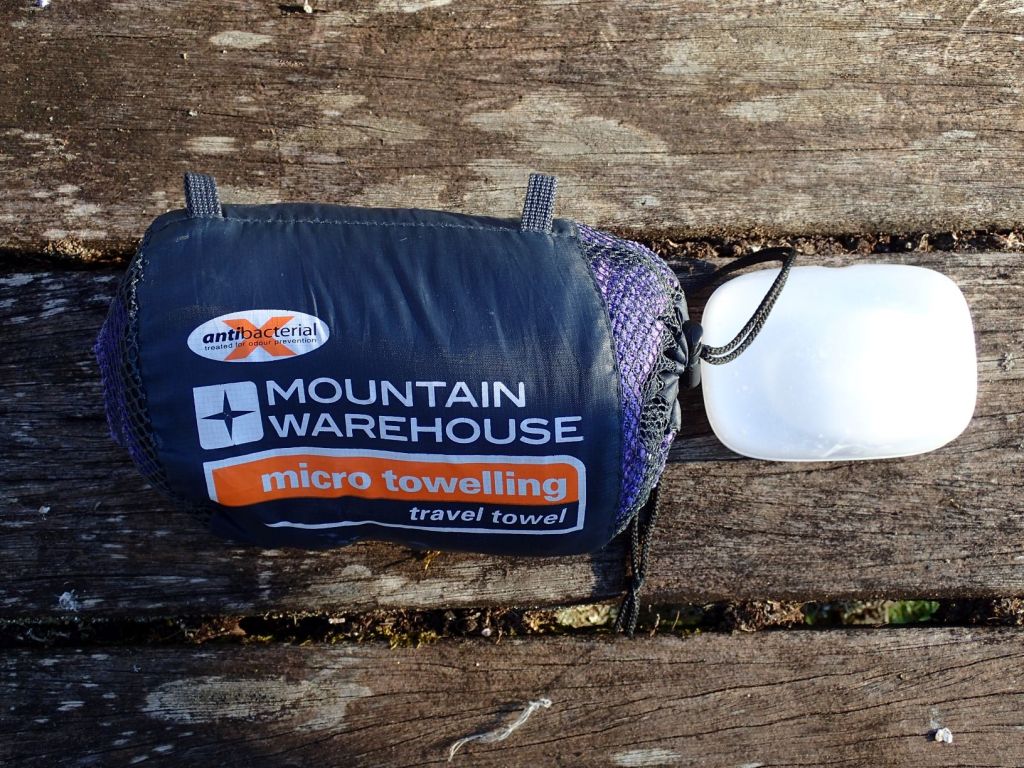
Travel towels are compact, lightweight, and quick-drying, – and will help you to dry off quickly after a dip, to avoid getting chilled. A bar of soap, kept in a light plastic container, is a very useful item to have with you even if you’re not planning to bathe. It can be used for cleaning cooking and eating utensils (it’s worth bringing a small scourer for this purpose too) and even washing clothes if you’re lucky enough to have a dry evening to hang them up afterwards. Wet clothes can be draped from the tent guy lines, or alternatively tied to the outside of your rucksack the next day to dry off while you’re walking.
A word of caution: as wonderful as wild swimming can be, take care not to stay in for too long. Particularly if you don’t have much body fat, it is easy to get mild hypothermia without realising. I learned my lesson the hard way after swimming and washing my hair in Glen Affric in March, when the river was full of snow-melt. I ended up spending the next hour huddled shivering in my sleeping bag, while my boyfriend poured hot tea down me and fed me bread and honey until my face was no longer blue. He himself had once got hypothermia after sitting in a river in Ennerdale for half an hour on a hot August afternoon – so watch out! Once your skin stops burning and starts to feel numb, it’s probably time to get out.
11. Head torch
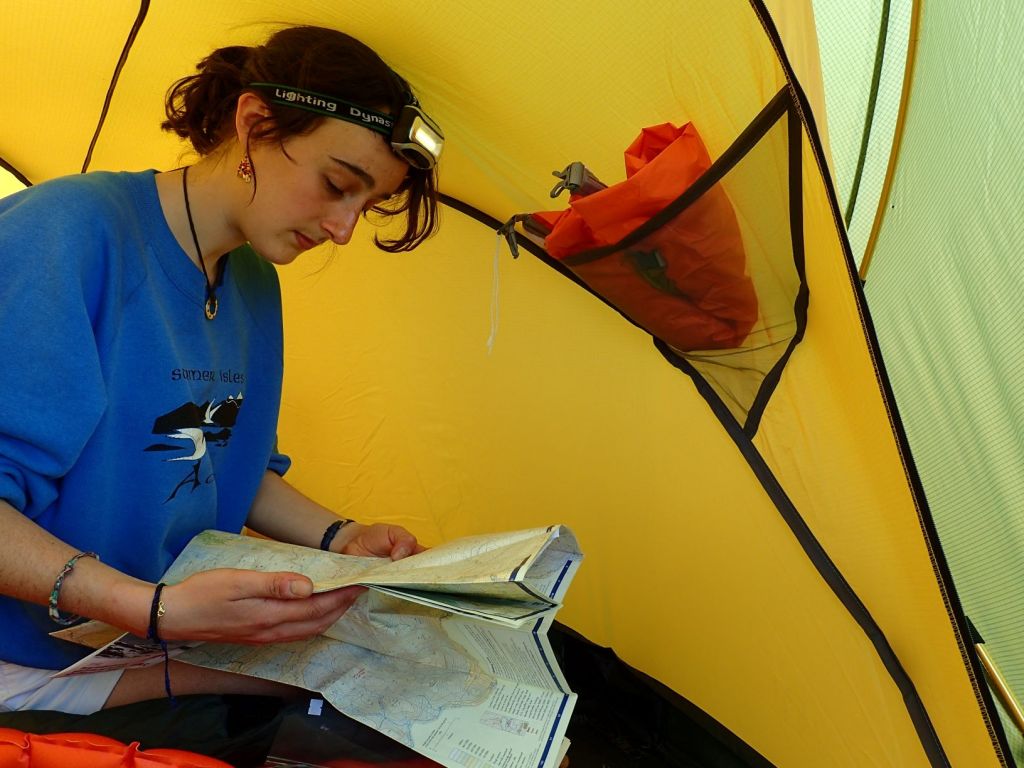
Winter nights in Britain can be long and dark, but even in the summer it’s important to have a good headtorch. It will help you to find things in the tent when light levels are low, and is particularly useful when fumbling for the tent zip in the dark if you need the loo during the night. When confined to your tent during the dark hours, a headtorch can also help to alleviate boredom by enabling reading or card games. Remember to bring plenty of spare batteries.
12. Reading book
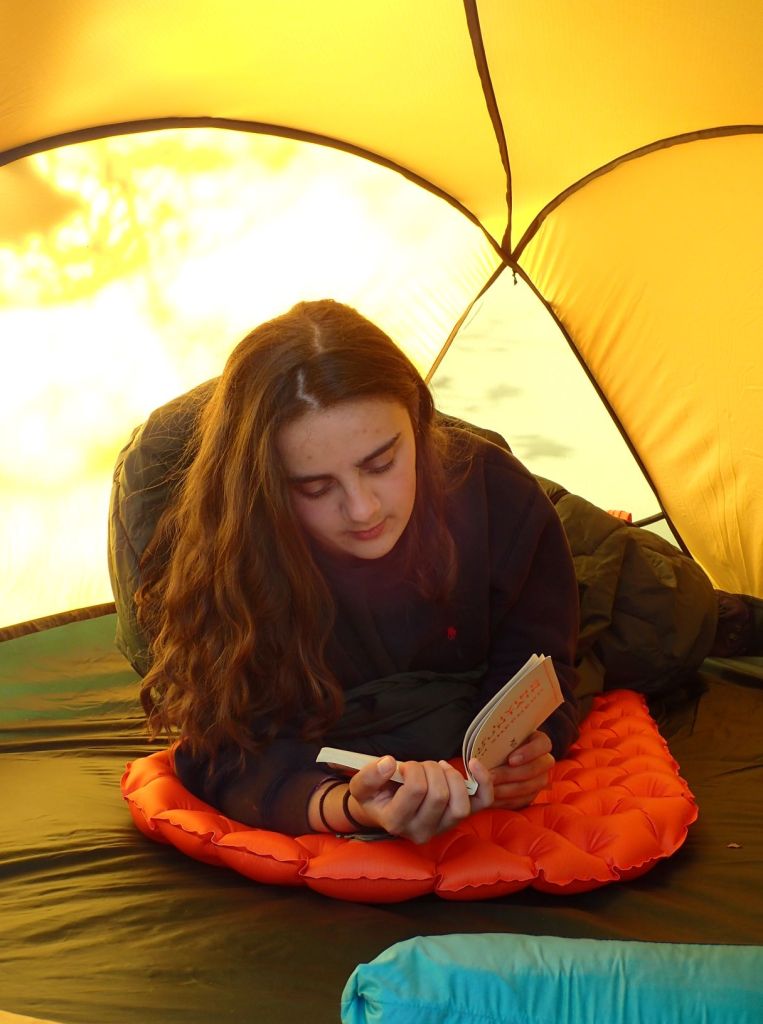
Perhaps this counts as a second luxury item … but I couldn’t imagine going camping without bringing something to read. Depending on how long and ambitious your days of walking are, there can often be lots of time spent relaxing in camp in the evenings.
Whether snuggled up in your sleeping bag or sprawled in sunlit heather outside, there is nothing quite like the feeling of settling down with a good book, with nothing but the whistle of wind and the burble of water to disturb you.
So that’s my top twelve wild camping items. Of course there are many other bits and pieces that are important to have with you on a backpacking expedition, but most of those fall into the category of general hillwalking gear rather than camping-specific items. Over the years, with many pitfalls along the way, I’ve built up my kit list to the point where I have a camping system that works for me – although this by no means will be the right way for everyone. Each person has their own preferences and ways of doing things, and the only way to figure out what works for you is to go out and have experiences yourself (hopefully joyful rather than miserable!)
No matter how you go about it, there is nothing quite like the magic of waking up and unzipping the tent to the view of a mountain sunrise glinting on tumbling water. Hopefully these tips have given you some ideas for your next wild camping expedition, wherever or whenever that may be. It could even be tomorrow, in your back garden!
 Musings on Mountains
Aw makes me want to get out there! Thank you so much for a very approachable and encouraging list for an adventure!
LikeLike